
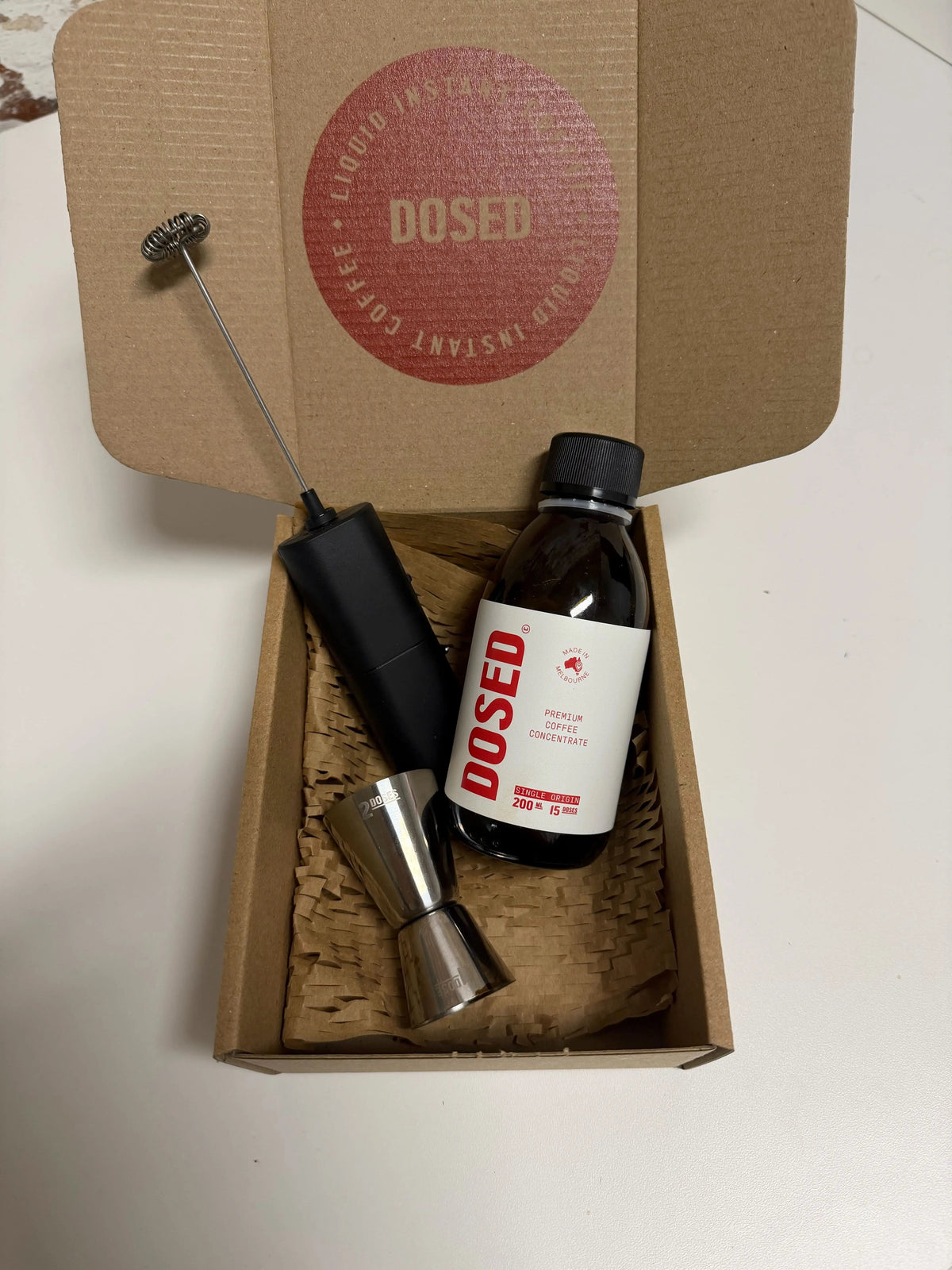
You don't need an espresso machine to make a proper latte. All a latte requires is strong coffee and silky frothed milk in roughly a 1:5 ratio, and you can get both at home with no machine at all. The fastest method takes about 30 seconds: a dose of liquid coffee concentrate, hot milk, and a quick whizz with a handheld frother. Here's exactly how to do it, plus the ratios and the mistakes to avoid.
In this article
- What you'll need
- Step 1: Start with strong coffee (no brewing required)
- Step 2: Froth your milk (no steam wand needed)
- Step 3: Pour like a barista
- How do you make an iced latte without a machine?
- Common mistakes (and how to fix them)
- FAQ
What you'll need
- Strong coffee. Espresso-strength, not regular drip. Liquid coffee concentrate is the quickest path; an AeroPress, moka pot or French press also works if you have one.
- Milk. Full cream froths best. Oat milk is the best dairy-free option ("barista" versions froth noticeably better).
- Something to froth with. A $15 handheld frother, or a jar with a tight lid.
- A way to measure. A jigger or shot glass keeps your dose consistent.

Coffee, frother and jigger in one box: a cafe-quality latte at home in 30 seconds, hot or iced.
Step 1: Start with strong coffee (no brewing required)
A latte is built on espresso, and the reason most homemade lattes taste weak is that people use regular-strength coffee. You need a small volume of very strong coffee, about 30 to 50ml. Here's how the no-machine options stack up:
| Method | Time | Equipment | Result |
|---|---|---|---|
| Liquid coffee concentrate | 5 seconds | None, just pour a dose | Espresso-strength, consistent every time |
| AeroPress | 2 to 3 minutes | AeroPress + ground coffee | Strong, clean shot-style coffee |
| Moka pot | 5 minutes | Moka pot + stovetop | Intense, espresso-adjacent brew |
| French press (double strength) | 6 to 8 minutes | French press | Strong but heavier-bodied |
| Instant coffee (double scoop) | 1 minute | Kettle | Convenient but flat, often bitter |
The shortcut: liquid coffee concentrate is pure coffee extract (just coffee and water), so a single 15ml dose matches the strength of an espresso shot with zero brewing, grinding or cleanup. Dosed makes theirs in Melbourne from fresh-roasted beans, in Original, Vanilla, Caramel and Decaf.
Step 2: Froth your milk (no steam wand needed)
Heat 200 to 250ml of milk until hot but not boiling, around 60 to 65°C (steaming, with small bubbles at the edge). Overheated milk scalds, loses sweetness and won't hold foam.
Then froth it one of two ways:
- Handheld frother (30 seconds, best result). Tilt the jug slightly, keep the whisk just under the surface for 10 seconds to build foam, then plunge deeper for 15 to 20 seconds to make it silky. You want glossy "wet paint" microfoam, not stiff bubbles.
- The jar shake (no gadgets). Pour warm milk into a jar no more than half full, lid on tight, and shake hard for 30 to 60 seconds until it doubles in volume. The foam is coarser than frother foam but completely respectable.


Cafe-silky microfoam in 30 seconds, cappuccino-thick if you want it.
Step 3: Pour like a barista
The classic latte ratio is about 1 part espresso-strength coffee to 4 or 5 parts milk. With concentrate, one 15ml dose per 250ml cup does the same job.
- Pour your shot of strong coffee (one 15ml dose of concentrate, or a 30 to 50ml brewed shot) into a 250 to 300ml glass or mug.
- Pour the warm milk over the coffee in a steady stream, holding the foam back with a spoon.
- Spoon the last centimetre of foam on top.
That's it. Total time with concentrate and a frother: about 30 seconds. Total cost per cup: around $2 in coffee, versus $5.50 to $6.50 at an Australian cafe. If you buy one latte a day, making it at home saves you well over $1,200 a year (more on that maths in Why Your Coffee Machine Is Sending You Broke).

How do you make an iced latte without a machine?
Even easier, because there's nothing to heat. Fill a glass with ice, add cold milk, then pour your dose of coffee concentrate over the top and stir. Cold milk won't froth the same way, so for a cafe-style finish, shake the milk and a few ice cubes in a jar first, or whip a quick cold foam with your frother. Full method in our Classic Iced Latte Recipe.
Common mistakes (and how to fix them)
- Weak, milky coffee. Cause: regular-strength coffee. Fix: use a concentrate dose or double-strength brew, never drip-strength.
- Flat, lifeless milk. Cause: milk too cool, or frothed after it sat. Fix: heat to 60 to 65°C and froth immediately.
- Stiff, dry foam sitting like meringue. Cause: over-frothing at the surface. Fix: spend more time with the whisk deeper in the milk.
- Bitter aftertaste. Cause: scalded milk or stale instant coffee. Fix: don't boil the milk; use fresh concentrate or fresh-ground beans.
- Inconsistent strength day to day. Cause: eyeballing the coffee. Fix: measure your dose with a jigger or shot glass.
Frequently asked questions
Can you make a latte without an espresso machine?
Yes. A latte is just strong coffee plus frothed milk in about a 1:5 ratio. Liquid coffee concentrate, an AeroPress or a moka pot all produce espresso-strength coffee without a machine, and milk can be frothed with a handheld frother or a shaken jar.
How do you froth milk without a frother?
Pour warm milk into a jar so it's no more than half full, screw the lid on tight and shake hard for 30 to 60 seconds until the milk doubles in volume. Microwaving the jar (lid off) for 20 seconds afterwards helps stabilise the foam.
What is the coffee-to-milk ratio for a latte?
About 1:4 to 1:5. A standard homemade latte is a 30 to 50ml shot of espresso-strength coffee with 200 to 250ml of steamed or heated milk, topped with about 1cm of foam.
Is coffee concentrate the same as espresso?
Not exactly, but it plays the same role. Coffee concentrate is pure coffee extract, so a single 15ml dose delivers the same strength as an espresso shot. Unlike espresso it needs no machine, no grinding and no technique, and it works in both hot and iced drinks.
What milk makes the best latte?
Full cream dairy milk froths most reliably and tastes sweetest. For dairy-free, barista oat milk is the closest match because it's formulated to hold microfoam.
Your local's latte, minus the queue
Strong coffee, silky milk, 30 seconds. No machine on the bench.
Latte Kit with Coffee
Concentrate, frother and jigger. Everything in this article, in one box.
 Liquid Instant Coffee
Just the coffee: 1 dose, espresso strength, 4 flavours. Made in Melbourne.
30-day money-back trial. Roasted and made in Melbourne.
Share:
Best Coffee for the Office: How to Get a Cafe Cup at Your Desk (No Machine)
Coffee machines aren't for morning people. But this is..